
PR teams drown in broadcast extracts, fan uploads, and highlight packages. Finding the clip that contains a principal, a protest banner, or a partner mark still often means scrubbing timelines by hand.
Dantani applies vision-language models on top of Eagle Eye computer vision so clips arrive pre-labeled by scene type, visible entities, and communications risk cues. Sports PR desks review ranked queues; models never publish.
Keyword search fails on silent video. Logos, gestures, crowd signage, and medical attention carry PR meaning that ASR never sees. Clip triage must be multimodal, evidence-backed, and honest about what detectors can and cannot assert.
Motivation
Match days and ceremonies produce hours of footage for minutes of decisions. A banner in the second tier, a touchline altercation, or a partner mark in a fan upload can define the next briefing. Manual scrubbing does not scale across multi-camera broadcasts and UGC simultaneously.
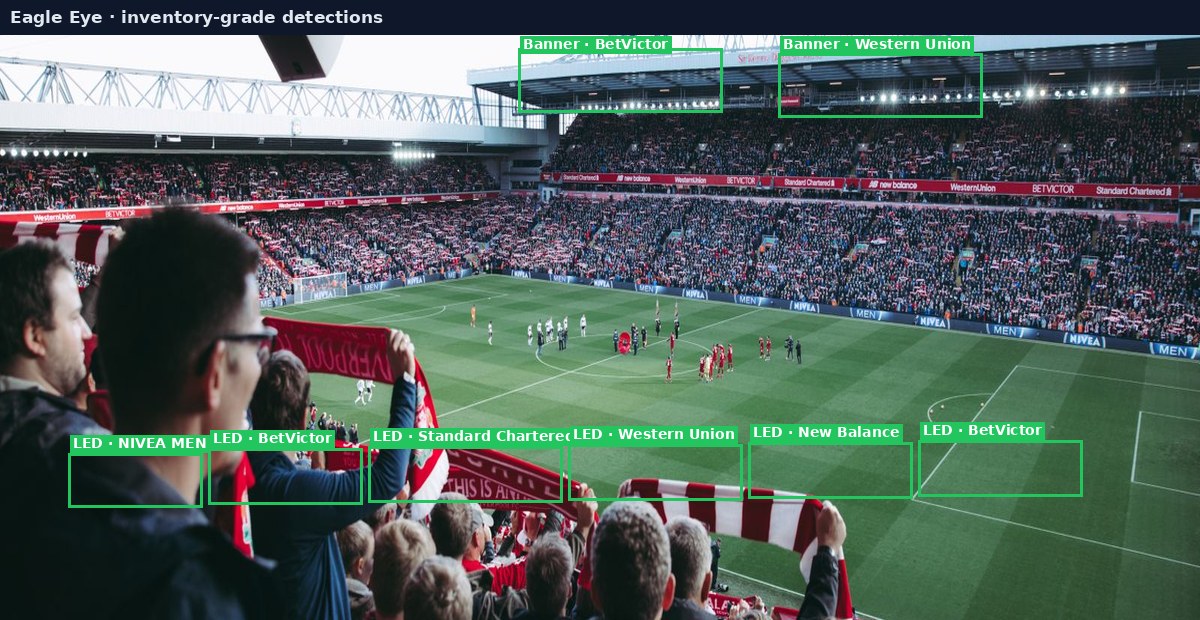
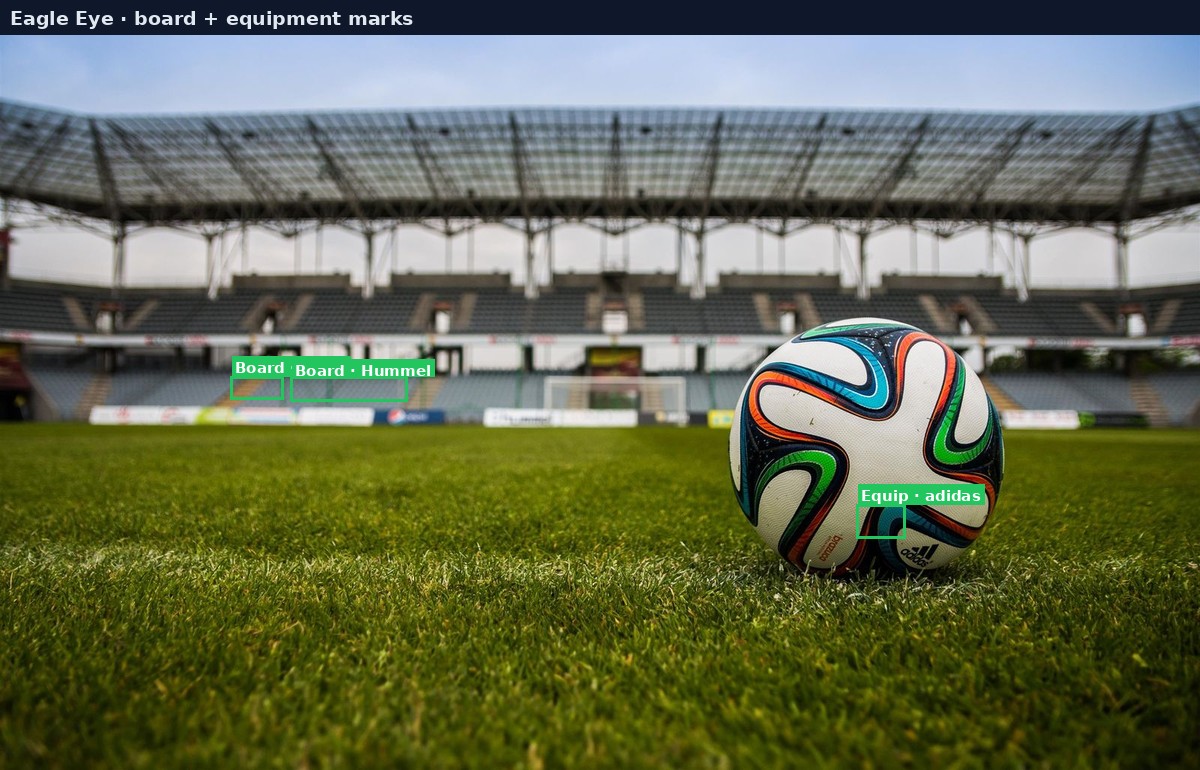
Eagle Eye object detection already proposes bounding evidence on sports scenes—boards, marks, principals in frame. VLMs add language grounding so those detections become reviewable labels for communications urgency, not just vision demos.
Methodology
Shot boundary detection segments long recordings. Frame samples feed a VLM with sports-aware prompts for principals, signage, medical attention, and brand marks. Computer vision detectors add bounding evidence. A ranker orders clips for human review by estimated communications urgency defined by desk policy.
Evidence packing matters. Every high-urgency label should carry frame references and optional boxes so analysts verify before escalating. Dantani treats unverifiable model prose without evidence as incomplete triage—not as a finished alert.
UGC and broadcast feeds share the schema but differ in trust priors. Fan uploads get higher scrutiny for deepfake and misattribution risk; broadcast chains carry rights and timing metadata when available.
Broadcast and clip triage examples
The stills below come from Eagle Eye object-detection methodology panels. They illustrate the kind of board and mark evidence PR triage teams review when ranking broadcast or digital clips—not Sponsorlytix product screenshots, and not published accuracy claims.
Desk workflow
- Ingest: register clip source (broadcast ISO, world feed, UGC) and rights flags.
- Segment and sample: prefer cuts with motion and crowd density over static filler.
- Model pass: VLM labels plus CV boxes packed as evidence.
- Rank: policy urgency — protocol and risk above routine highlights.
- Human review: confirm or downgrade before Sports PR escalation.
- Archive: keep evidence packs with decisions for audit.
Koba inside Eagle Eye dashboards can narrate why a clip ranked high, citing labels and evidence IDs. Terminal, coming soon, will let media ops pull ranked queues into existing MAM and review tools.
Schemas and code
type ClipSegment = {
  clipId: string;
  startMs: number;
  endMs: number;
  source: "broadcast" | "ugc" | "other";
};

type TriageLabel = {
  segmentId: string;
  labels: Array<"principal" | "signage" | "medical" | "brand" | "other">;
  boxes?: Array<{ x: number; y: number; w: number; h: number; cls: string }>;
  urgency: "routine" | "brand" | "protocol" | "risk";
};
def triage_clip(frames, vlm, cv_detectors):
labels = vlm.label(
frames,
prompts=["principal", "signage", "medical", "brand"],
)
evidence = cv_detectors.run(frames)
return rank_for_pr(labels, evidence)
def rank_for_pr(labels, evidence):
# Policy order is configuration — not a learned vanity score.
priority = {"risk": 0, "protocol": 1, "brand": 2, "routine": 3}
return sorted(labels, key=lambda L: priority[L.urgency])Failure modes
- Silent false calm: VLM misses banners outside sampled frames.
- Over-urgency: celebration gestures labeled as altercations.
- Brand hallucination: model names marks without CV evidence.
- UGC misattribution: wrong match or date on fan uploads.
- Rights blindness: ranking clips the desk cannot legally redistribute.
- Auto-publish risk: triage queues must never post without human gate.
Real-world examples
- Stadium banner moments that never appear in commentary transcripts.
- Touchline altercations where principals are visible before audio clarifies context.
- Partner marks in fan videos that need rapid rights and reputation checks.
- Medical staff attending athletes in broadcast cutaways that trigger wellness communications paths.
- Ceremony signage behind principals that protocol teams must clear before highlight release.
Where Dantani products fit
Sports PR owns the ranked review and escalation. Monitoring folds clip-derived events into the wider media graph when labels clear human review. Terminal, coming soon, connects queues to MAM systems. Koba inside Eagle Eye dashboards explains ranking drivers with evidence references—never unsupervised release.
Evidence discipline
Bounding boxes and frame indices exist so analysts can disagree with the model quickly. A label without evidence is a hypothesis; a label with a box is a review item. Dantani keeps that distinction visible in Eagle Eye dashboards so Sports PR never mistakes methodology stills for certified production scores.
Takeaways
VLMs turn clip mountains into ranked review queues. Dantani pairs Eagle Eye vision with language grounding so sports PR teams see the moments that matter first—with boxes and frames as evidence, not as theatre.